Saturday, 29 June 2013

The Big Three Zero

With my brother reaching the big three zero this year, and having witnessed a fair few family members reach the milestone over the years, I thought it was only fair that I stopped taking the mick and put myself in their position, taking the time to think about what turning really 30 means.

Perhaps, in reality, celebrating 30 as the epitome of adulthood is a bit outdated. Come on, let’s be completely honest here, who at 30 really knows who they are or where they want to be? Maybe that’s just my youthful wonder shining through because I am yet to figure it (kind of). But from speaking to those around me, it seems like no one really ever knows, so why is there this stigma around turning 30? At 30, do we magically see the light and obtain the past three decades of wisdom in an all-knowing rite of passage? Alternatively, do we suddenly feel the urge to settle and no longer battle with risks? What is it about 30 that is so daunting?

My generation will know all too well the scenes from “Friends” where the members of the gang all turn 30, each one in a fit of despair at the prospect of their fun loving life coming to the end. But really? Come on, it’s just a number, how can an age change your life THAT drastically? It seems old fashioned that by 30 we need a career, a family, a mortgage…it just doesn’t work like that anymore.

A modern life has turned being 30 into the same as turning 20 (maybe with less of a university lifestyle but still the same). The maturity levels of the people I know have shown me that there’s no difference, but that could just be the people I hang out with! I don’t know if it is just me, but 30 is just not a big deal, why would it be? 30 is no longer mid-life, most of us will way exceed 60 so there’s no rush to think about the future. Times have changed and so should our attitudes to turning 30 (remember this is coming from a 21 year old so I may actually have no idea).

Granted, the big three zero still scares the heebie-jeebies out of me. To me, it is still the turning point of adulthood, I can preach a change of attitudes all I want, I still it see it that way. I see 30 as the beginning of a new chapter, even though it’s actually not that far away. Who knows where I’ll be in 9 years’ time, but I will be 30. I guess it’s the fact your leaving your 20’s, whence you could say “A decade ago I was a teenager” (weird huh?). I think that’s it. Becoming 30 means saying goodbye to your 20’s and consequently realising that your teenage years are long gone. How sad. No one wants to be old, and lucky for us 30 is no longer old, but it is a good way away from being 15. I think we all have goals, and 30 is often the time limit to reach them. For me, learning at least one new language before I’m 30 is a pretty achievable goal, but for a lot of my friends having it’s having their first baby! So when I weigh up turning 30 like that, yea, I can see why it’s scary.

So all in all what does 30 really mean. Is it the be all and end all of teenage life, or is the beginning of a new era, a new chapter of life?

I think it is safe to say that the world definitely does not end at 30. No, it ends at 40.


I joke of course.

Sunday, 16 June 2013

Job-Hunting

There once was a girl named Vim,
Her prospects looked rather dim,
After finishing uni,
And turning a little bit loony,
Job-hunting began to get grim.

Applications, research and more,
CV’s and cover letters galore,
Vim’s heart began to sink,
She really needed to think,
About how much, she could endure.

Boring format after boring format,
Her CV became a doormat,
Vim needed something fresh, something new,
Slowly an idea began to stew…

Typing away all night,
Her hair was a worrying sight,
Her research soon became fun,
She wanted her project finished and done,
Her ideas churned, in the moonlight.

Her fingers were tipping and tapping,
Like the alphabet clapping,
Vim began to finish,
Her fears began to diminish,
Her thought process securely mapping.

She finally fell asleep,
Her papers were all in a heap,
Tomorrow would be a better day,
When she could finally say,
“I am NO LONGER a sheep.”

She awoke with a smile,
Time to put her theory on trial,
A list of companies she had,
None of them remotely bad,
All stacked up in a towering pile.

Time to make a proper brew,
She knew what she needed to do,
Vim had more than just a list,
She put job searching in a twist,
To her theory, she stayed true.

Through the night, she had on her research hat,
Not only finding jobs, but specific companies that,
she thought were compatible with her,
And only a few there were…

What made her piles of paper so tall,
Was that Vim had been thorough all in all,
Finding examples of why she wanted to work,
And why she wasn’t an average office clerk,
Her back was finally off the wall.

She spent hours discovering companies she loved,
She hoped they would fit her hand like a glove,
Looking at all the work that they did,
Vim was excited, just like a kid,
And all she needed was a self-motivated shove.

She put her efforts into her cover letter,
She was free from her restraint fetter,
Perfect it had to be,
No longer glum was she,
Vim: a self-proclaimed go-getter.

It’s important to walk off the beaten track,
To stop your cover letter from becoming whack,
It’s easy to get lost, in the crowd,
And forever live on a uni cloud,
Before you crash back down with a smack.

Really find companies suited to you,
And let your enthusiasm shine through,
If you can show real passion,
Honestly, anything could happen,
And you can find your dream job too.

What the future holds we’ll never know,
But doing something different is worth a go,
You don’t want to sit back and regret,
Getting caught up in the careers net,
After three years, that’d be an awful blow.

So despite what you hear, the future is still bright,
There are so many careers and jobs in sight,
Just think carefully before you apply,
And give unorthodox methods a try,
And your career could take a great flight.

Throw away all the humdrum advice,
And listen to your personal vice,
Don’t worry if you’re told you’re wrong,
To your own morals, stay strong,
Otherwise you could pay the price.

Employees will be able to see,
That you’ve done your research, hopefully,
Just remember to make job-hunting fun,

It’ll show through, when you’re done!

Tuesday, 4 June 2013

Being Quiet in a Loud World

After a long battle against my final year of university, fighting off my dissertation and finals, I have finally found a spare moment to start blogging again (in the midst of job hunting and planning an adventure in India). Something that has struck my recently is the somewhat apparent differences between my quiet and loud friends and I slowly began to question: where do I fit in to this spectrum?

I have recently started an internship in the tech world and I’ve got to say I realised that the introvert in me has been struggling!

Just to set the scene, there is  a lot of socialising whilst the work is taking place and I’m one for getting the work done. The mix of work and speaking is pleasant but it’s often hard to find the balance when the people around you find it so easy to talk but you’re panicking about what needs to be done! I don’t know if it’s just me but I like to know that everything is in order, what needs to be done and most importantly when. And socialising comes second to it. Call me boring if you will, but if a job needs to be done, it needs to be done. However I diverge.

More often than not these days, offices are open plan and everyone is everywhere. It’s hard to find some space to sit and gather your thoughts without someone looking over your shoulder to see what you’re doing. And I know it’s not only me that feels this way, and I finally feel that it’s okay to admit that I’m sometimes on the quieter side of life.

After reading Susan Cain’s ‘Quiet’, I thought I was reassured by the thought of being an introvert. However, I slowly began to confuse myself, am I really an introvert or have I just read that I am? Do I really find it that difficult in social situations or am I convincing myself that I do? I just don’t know anymore! It’s easy to see yourself on every page, but when you sit back and self -assess (and it’s always important to do so) whether it really applies to you.

So walking into a buzzing office with friendly faces was a bit of a shock to the system. It often takes me a while to warm up to new people, I like listening to what others have to say and I like asking questions rather than answering them and I don’t think that’s a crime. In fact, statistics show that people that think this way make the best leaders (or so Quiet says). So why did I feel so out of place?

I think it was the pressure of people expecting you to talk to them. But why should one person have to change for the sake of another? I like talking to people, I really do, I just like to know what I’m talking about before diving in the deep end. And I think it is the employers job to realise these different qualities in people, and sadly I don’t think that they do. More often than not, it is the loud extroverted person that shines in interviews because they’re in their comfort zone, but that doesn’t make them any more qualified for a job than the introvert. It’s just the introvert performs better in the one to one interview than the extrovert, spends more time planning and thinking rather than stating what comes straight into their mind. And yes, this is an over simplification and an exaggeration, the two personality traits aren’t on a dichotomy but the point is clear, there is a difference.  But the employer needs to see the qualities in both of these people, and not always jump on the extroverted band wagon.

I think what bugs me the most is that extroverted people often take the credit for ideas that weren’t their own. In my case, this is definitely true. Just because I don’t voice my idea loudly but say it to one person and implement it, does not mean that the loudest person on the team can, nor should they, take the credit. Indeed, there is not clear way to resolve this other than putting on a false bravado, that or being filmed! The latter being the least socialist idea, I will strive to be louder, but it will be hard and it’s not who I always am. Don’t get me wrong put me with a group of people talking about something that I’m passionate about and I will get my point across, but put me with people that are speaking a foreign lingo of celebrities and gossip and sit quietly and listen.


So why have I decided to write about this? I think it’s important for people to realise that being loud isn’t the only way to be successful. You can be a quiet thinker and your potential will shine through. Despite what Cain says in ‘Quiet’, I don’t always think it’s necessary for you to train yourself to be an extrovert. Yes, social anxiety is a problem but being quiet can sometimes mean being the loudest in room.

Sunday, 25 November 2012

Brave: new role or stereotype?


After recently getting very excited about watching the first Disney Pixar movie with a female leading protagonist (as it was so advertised), I’m left feeling bewildered as to what this movie means about feminism.

Now don’t get me wrong, I do realise that this is just an animation, aimed at children but it cannot be denied that gendered roles in Disney films have a direct impact on young children. In all the classic films, women are seen as the damsels in distress who need to be saved by men in order to survive and restore order to the kingdom. Pretty princesses that are in need of rescuing. Evidently, with the release of Mulan, Disney were able to present a cartoon about a strong woman fighting in a war, however she was only able to do so by dressing as boy – stereotype or what? Brave was meant to be revolutionary because of the emphasis being on the first protagonist in a Pixar film, not cartoon, since all the Disney princesses are considered protagonists anyway, which is a whole other discussion in itself.

The main character, Merida, a young Scottish princess was presented in all of the advertisements as strong and confident. She stands proud against a dark back drop, holding a bow and arrow, a true depiction of a strong feminine character. So, from seeing this poster and with a film named Brave, I assumed it would be about a princess leading her country into battle. How wrong I was.


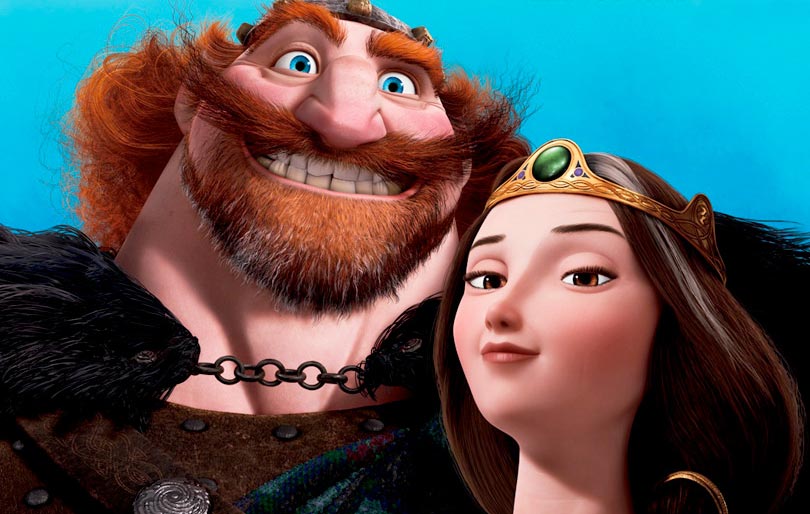
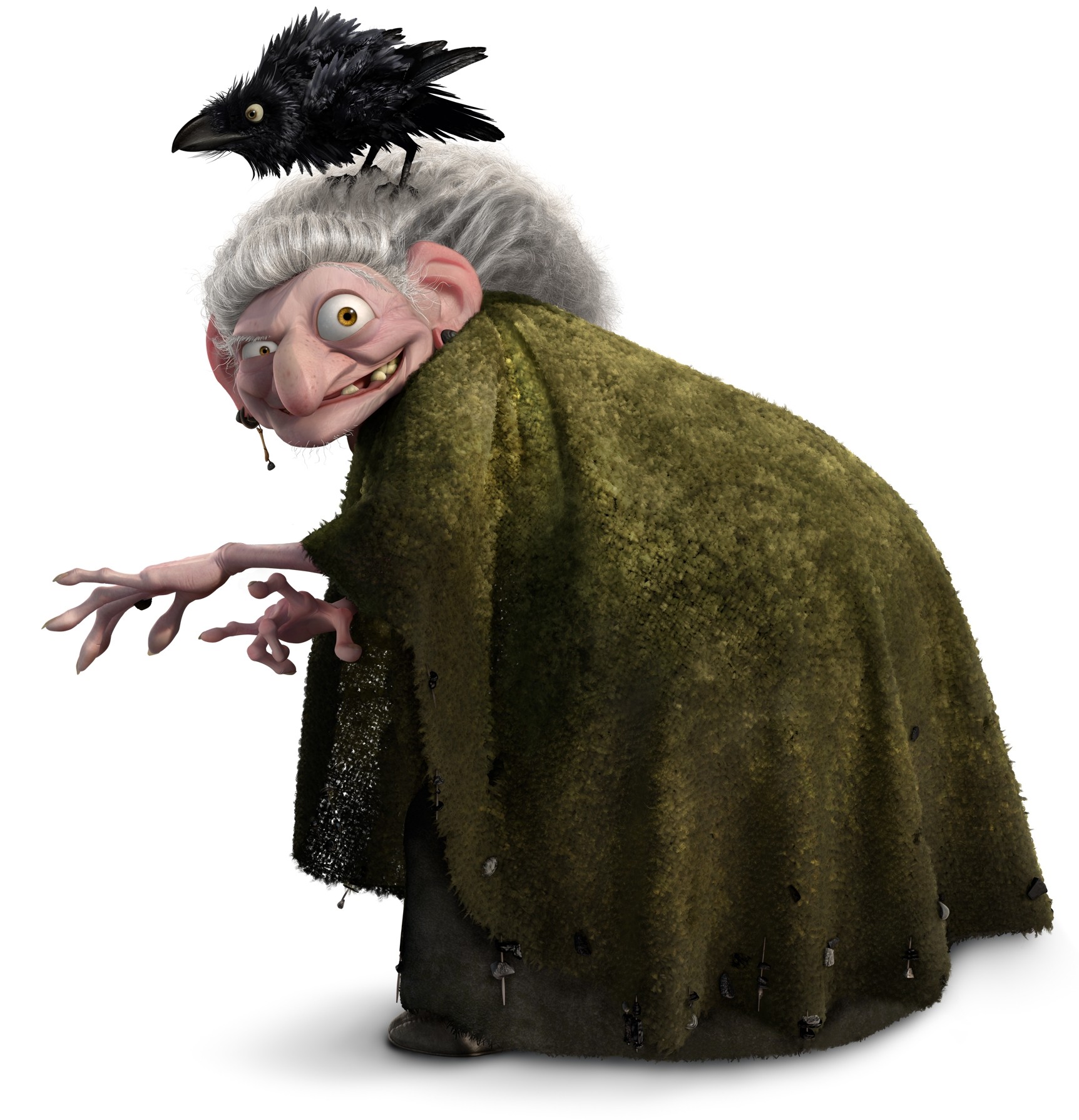
The film is centred around a young princess and her pending marriage to a young prince. What makes this story different (apparently) to any other Disney story is that Merida does not want to get married. She in fact wants to enjoy life, she is what some people would term a “Tom boy”; don’t ask me why, I don’t know – it’s just that obscure that a girl would like the same activities as a boy. However, that is beside the point, so Merida being a young girl that doesn’t want to get married finds herself in a predicament as her mother, the Queen, is adamant it must happen to keep the peace of the country. Furthermore, it meant to be completely radical and revolutionary that Merida doesn’t want to get married – is this really that astounding in the modern day 21st century? To say it quickly, Merida sees a witch, casts a spell, her mother turns into a bear and the story revolves around Merida needing to reconcile with her mother to turn her back human and ultimately is able to change the tradition revolving marriage.

Now, I can see how on one hand this is a depiction of feminism. A young female character going against the trends of the time to break traditions and change history forever. A strong character – I guess – fighting the system. I mean this is what feminism consisted of when we look back to the Suffragettes, Merida managed to single handily (not really) change the opinion of all of the Lords and her mother so she was freed from forced marriage. But do we really want to present an outdated image of feminism to children?
The matter of fact is, that there is yet to be a leading animated story with a leading female character that is not overridden with the message of marriage and a happy ending. Although Brave does come close, she does get out of getting married, her choice is essentially to make sure she can choose her own husband in her own time. It does not consider that she may not want to get married at all. Furthermore, she only has the “choice” out of three boys, the only change being she gets to choose which one and that it is not decided through competition. Is this really something that can be attributed as a success of a strong feminist character, let alone brave?

Now, I did really enjoy the film. It had a lovely undercurrent of family emotion (another stereotypically feminine trait, coincidently underlying this so called revolutionary film). It was funny, Merida was a character that I think young girls of today could relate to. She enjoyed the same things that boys did, despite the fact that activities shouldn’t be gendered anyway. She despised having to wear a tight dress for her proposals (an interesting subject in the film) and she rebelled against her mother’s traditions and sympathised with her father. This does indeed present a lovely picture of a strong girl that knows who she is and what she wants but is torn between staying true to herself and making her mother happy. Indeed, by trying to do what she wants she turns her mother into a bear! The fact the two women in the film couldn’t talk about their issues only reinforces the stereotype of women being irrational and stubborn characters. Granted, however, that Merida is breaking  the stereotype of princesses, her issues revolve around marriage – clearly the only problem that girls have to face growing up.

Furthermore, the issue of despising the tight dress is something I disagree with as well. It may come across as contradictory but it presents the message that a girl cannot want to look good and act how they want at the same time. There is a particular point that emphasises this in the film as Merida rips her dress as she shows off her bow and arrow skills to the watching crowd. Arguably this is to show her emancipation from the restriction of tradition, however I saw it as a division between beauty and “bravery” (as the film so wishes to call it). No division is necessary, for the character to be a truly modern feminist protagonist, in my opinion, she should have been portrayed as both beautiful and strong.

For a film that was taking pride in itself because of its move towards feminism, there was a definite lack of women characters – there were only three. The Queen, essentially the one in the wrong, Merida a “Tom –boy” and a witch that sparked the bear problem. Now, the Queen is a strong feminist in my opinion, despite wanting to inflict tradition on her daughter, she’s a strong character that could evoke silence in a room full of arguing men. She took pride in her appearance and had power, the men were all awaiting her decision before leaving and were beckoning her answer. She was wrong for trying to enforce marriage upon her daughter but only did so to stop a war. Despite this it was her overall compromise and decision for the freedom of marriage which saved the day, not Merida’s. Of course, it’s true that she would not have come to such a decision without Merdia confronting the tradition but her lack of bravery is shown by going behind her mother’s back to resolve the problem, this only makes her seem further irrational and irresponsible – in fact, far from Brave.


So it becomes clear that Merida is not the strong leading feminist character that the posters portray her to be. No. The Queen is, she is even strong enough to admit she is wrong and has the power to change tradition. I guess you can call Merida “Brave” for wanting to break tradition but really this just seems like a teenage rebellion, that the Queen is left to resolve. If anything the Queen is the leading protagonist and is the “Brave” one, and she was a bear for the majority of the film. But, sadly feminists are still left waiting for a Disney film, where marriage isn’t the sole problem, nor resolution, confronting women.

Monday, 1 October 2012

Women in the Olympics


So what does it take to be a woman Olympiad? Physical and mental strength, the ability to achieve, motivation and ambition and …good looks?


Really? Since when has the Olympics been a forum to gawk at half naked women? When watching the Olympics I was shocked at the amount of focus there was on how athletes were judged on their physical appearance, it’s insane. These women are at the peak of fitness in a competition that defines the world’s best athletes, pushed to their ultimate abilities and now women have to worry about how they on top of it?

Women are always seen as objects to be looked at and admired – fine. But why should this cross into a realm where the focus is on sporting ability and not beauty. Women should not feel that they need to look good when they’re trying to win gold medals, it’s just an extra unnecessary pressure. Take for example the gymnastics. The women gymnasts have a noticeable amount of make up on, and their hair styled to perfection. The men don’t. So how does wearing make up make it more likely that you’re going to win a medal, the men seem to be able to without it?

I have no problem with women wanting to feel better about themselves, but in my opinion when it’s in the competitive realm of the Olympics a focus on looks is irrelevant, and unfortunately it takes away from the tremendous efforts of the athletes. Audiences sit judging who is prettier rather than who can run faster. It is outrageous.

It even crosses the boundaries of sporting outfits. Women athletics participants can be seen running is what can only be described as underwear. If having your stomach out helped you to run faster, surely men wouldn’t wear shirts? So why is it that it has become the norm for women to run in shorter shorts and a sports bra whereas men wear longer shorts with a top that covers there stomach? And no I’m not an expert on the subject and I would find it interesting if there was a reason for why this is, but I see it as another objectification of women.

I know this may seem outdated (the Olympics were two months ago) but the message is still resonant. As soon as the Olympics had finished, British women athletes could be seen in the pages of glossy magazines with the article message being “they can look beautiful too”. Really, it is just me that this angers? Whatever! Why do they need to be judged on their beauty AT ALL? They’re Olympians! They’re the fittest, strongest and arguably the most amazing sporting women in Britain, but no that doesn’t matter because “they can look beautiful too”. Look at the bigger picture, beauty is not the only thing that matters, these women won medals because of their physical greatness not good looks.

It was only four years ago that Jessica Ennis was criticised in by the British tabloids for being ‘fat’. Seriously? How can a triathlon winner be anywhere near fat? How is that kind of judgement supporting your country? Why should it even matter if she was? It’s disgusting. All this shows is that the British public care more about how our women athletes look than their ability to win, and if this isn’t a deterrent enough for aspiring female sports stars I don’t know what is. Beauty should not be a requirement of sport.

Now a celebration of beauty is fine, although I do disagree with the added societal pressures put on women because of it, that is indeed another rant. My point here is that Olympians don’t need the extra stress of beauty on their minds when they’re competing in a world competition, they only need to be thinking about their task at hand. Women do not need to objectified any more and it’s problem that is nestled so far in our minds that it has even tainted the greatest sporting competition on the planet.  

Wednesday, 12 September 2012

Internships!

As an undergraduate, just about to start her final year at university it has been drummed into my head that I can get nowhere in life without an internship, work experience and good grades. So how is one meant to acquire all the skills that can 'assure' you a successful future?

Well first things first, you're expected to take every opportunity thrown your way. Essentially this is true, and why shouldn't it be? Students should take all the opportunities that they can, so that they can broaden their horizons and all the rest of it. However, when it comes to working for free, should this still be the case?

As it stands in Britain, being a student means one thing: working for free. As an undergraduate, there's no choice in the matter (except for the very lucky few) you just have to work for free so you can get all that worthwhile experience down on your almighty CV. And I am writing from experience here, over the last year I've been lucky enough to have three internships, two of which were unpaid. Unpaid work results in a dependency on your parents and your student load. Again, I'm lucky enough to have parents to depend on throughout my internships, but what about all those students that don't. They're forced to turn down internships because they cannot afford to work for free! This means that their CV's lack the experience that wealthier students have, and hinders their job seeking efforts. Now, I don't know how you see this, but to me it just isn't right. There's no two ways about it at the moment, you either can accept unpaid work, or you have no experience on your CV.  Why is it that companies can expect students to work for them for free?

Well as it stands, the competition is so fierce that students are competing for unpaid internships. So students are forced to settle for less and less benefits because if they have the audacity to ask for any wages, they are rejected and the next work hungry student gets the job. Furthermore, it is so vehemently drummed into our heads that you can nowhere without any experience that almost everyone is begging companies to let them work for them without a salary, in some cases not even offering to pay for travel expenses or lunch. Therefore, sadly unpaid work has become the norm. Companies expect interns to become a part of the staff and do important, substantial work for them. Not only this but the work they do has to be of the same standard as other staff, the only difference being that they aren't paid for their efforts. It is because of this that unpaid internships are accepted in our society because in our society it there is no other way to get any experience.
This competition is not even considering the fight for paid internships, which you can only gain if you need to have work experience in the first place. So the cycle continues, in order to one day be paid minimum internship wages, you have to do unpaid work throughout your years at university. The stereotype of a poor student living on bread and baked beans springs to mind. How has it come to the point that for an entry level job at company a student needs to have a mass of work experience which twenty years ago would have enabled them to gain a better job without having to have worried about doing any unpaid work experience? In my opinion this plays straight into the hands of class division as those who can afford to work for free (i.e. depend on their parents and loans) can gain all the work experience they need, however those that can’t afford to obtain an unpaid internship are left to struggle and finish university with just a degree and substantial debt.

Arguably, this would all be worth it if the unpaid labour helped students earn successful careers at the end of their degree. Unfortunately, this is no longer the case. In recent news, it has surfaced that many new graduates are over qualified for graduate jobs because of the vast amount of work experience that they have been told they’ve needed to acquire over the past years. So after competing for numerous internships graduates then are rejected from their dream jobs because they're 'over qualified'. Thus graduates face the predicament of being over qualified for entry level jobs but under qualified for anything else, this then forces them to accept any job offered, irrelevant of prospects. Or worse into a graduate internship. An unpaid graduate internship is the ultimate fear for most students. This would mean accepting an unpaid internship when you no longer have a student loan to depend on. Again, this often results in a lasting dependency on parents because you can’t afford to leave your childhood home.

It just baffles me why students are expected to accept unpaid work for their labour when they’re contributing fully to a company? I just cannot see the justification in it, especially when they’re left unemployed at the end of their degree despite working for free. In an ideal world an internship would at some point lead to a full time job, however it is rarely the case. In most instances, a company will use the free intern for a summer and write a reference. This is fine, but unfortunately proves to be of very little worth to the student. A reference is fine but there’s the over looming question of the next student who has triple the amount of work experience than you, because they’ve been able to afford to accept more unpaid work. It is here that your five years or so of unpaid labour is futile as it eventually gets you nowhere. All in all, unpaid work is the go to and end all for all students.

So really the only question left is: what are students meant to do?